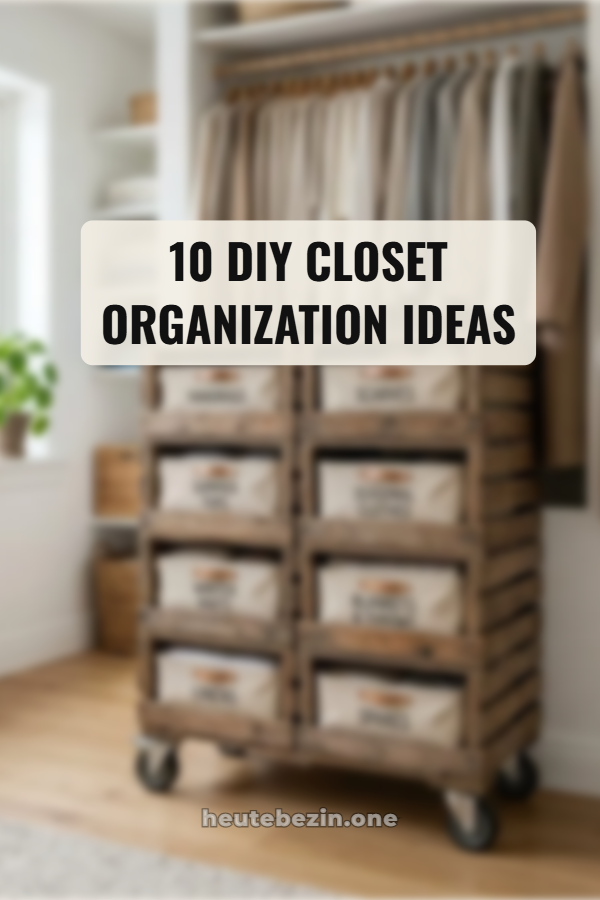
10 DIY Closet Organization Ideas

A well-organized closet makes everyday routines easier by creating dedicated storage for clothing, shoes, accessories, and seasonal items. DIY closet organization projects provide practical solutions that improve storage capacity without requiring expensive custom cabinetry or professional installation. Whether you have a spacious walk-in closet or a compact wardrobe, simple handmade organization ideas can maximize available space while maintaining a clean and attractive appearance. This Pinterest-style guide presents ten beginner-friendly DIY closet organization ideas that combine functionality with modern design. Each project includes practical instructions, preparation tips, and styling suggestions that help create an organized storage system suitable for everyday use. You will also learn how to prepare materials, avoid common organization mistakes, manage your decorating budget, and maintain long-term order. Every project focuses on realistic improvements that support efficient storage while enhancing the overall aesthetic of your closet.

Why DIY Closet Organization Is Trending

DIY closet organization remains one of the most popular Pinterest ideas because it solves everyday storage challenges while allowing complete customization. Many homeowners and renters want practical organization systems without investing in expensive built-in storage units. Handmade organizers, shelves, baskets, dividers, and hanging systems can be adapted to fit closets of nearly every size and layout. Most DIY tutorials require only basic measuring, cutting, painting, or assembly skills, making them suitable for beginners. Organized closets also improve daily routines by making clothing and accessories easier to find while reducing clutter. Combining practical storage with attractive home decor creates spaces that are both functional and visually appealing. This balance of affordability, creativity, and everyday usefulness explains why closet organization projects continue to trend across Pinterest and home improvement communities.

Materials and Preparation

Preparing carefully before beginning ensures every closet project fits properly and functions efficiently. Gather measuring tape, ruler, pencil, storage baskets, wooden boards, closet rods, adhesive hooks, screws, drill, screwdriver, shelf brackets, fabric bins, labels, plastic containers, wood stain or paint, sandpaper, hot glue gun, and organizing dividers. Empty the closet completely before measuring available wall, shelf, and floor space. Sort clothing into categories such as everyday wear, seasonal items, shoes, bags, and accessories before planning storage locations. Choose a consistent color palette for baskets, bins, and labels to create a cohesive appearance. Organize tools before beginning installation and confirm measurements twice before cutting or mounting any materials. Careful planning improves organization while reducing unnecessary adjustments later.


Adjustable Wooden Shelf System

How to Create

Install adjustable wooden shelves to maximize unused vertical closet space while keeping storage flexible for changing needs. Measure the closet wall carefully before cutting shelf boards to the correct length. Sand each board until smooth and paint or stain it to complement the closet design. Secure adjustable shelf tracks firmly to wall studs before attaching brackets and placing the shelves. Arrange folded clothing, storage baskets, shoes, and seasonal items according to frequency of use, keeping everyday essentials within easy reach. Leave adequate space between shelves for larger storage containers and future adjustments. This beginner-friendly project improves organization while allowing shelf heights to be changed as storage needs evolve. Matching storage bins help create a clean and coordinated appearance that complements modern design and minimalist style.


Hanging Fabric Sweater Organizer

Step-by-Step Guide

Create a hanging organizer that stores sweaters, jeans, handbags, or folded clothing without taking up valuable shelf space. Use sturdy fabric, lightweight wooden dowels, or reinforced cardboard panels to create individual compartments connected vertically. Stitch or glue the sections securely while maintaining equal spacing between each shelf. Attach strong hanging loops at the top so the organizer fits over a closet rod. Reinforce the bottom panel to prevent sagging under heavier clothing. Choose neutral fabrics for a timeless appearance or patterned fabric that complements the closet color scheme. This easy project helps maximize vertical storage while keeping folded clothing visible and accessible. Organized compartments also reduce stacking, making it easier to maintain tidy shelves.


DIY Shoe Storage Wall

How to Make

Transform an empty closet wall into an organized shoe display using simple wooden shelves or angled racks. Measure shoe sizes before determining shelf spacing to ensure adequate clearance. Install narrow shelves securely while keeping the angle slightly tilted for improved visibility and easier access. Arrange shoes by category, color, or season to simplify daily selection and maintain visual consistency. Decorative storage boxes can be added for less frequently used footwear. Keeping shoes off the closet floor increases usable space while protecting them from dust and damage. This practical organization project combines functionality with attractive presentation suitable for closets of various sizes.


Accessory Pegboard Organizer

Setup Method

Install a decorative pegboard inside the closet to organize handbags, belts, scarves, hats, and jewelry efficiently. Paint the pegboard in a neutral shade before mounting it securely to the closet wall using appropriate hardware. Insert movable hooks and small shelves according to the size of the accessories being stored. Group similar items together to improve organization while leaving enough spacing to avoid overcrowding. Decorative labels can identify storage zones for frequently used items. This beginner-friendly project keeps accessories visible, reducing the time spent searching during daily routines. Coordinated colors and neat spacing help maintain a clean, organized appearance throughout the closet.


Drawer Divider System

Execution Process

Create custom drawer dividers that separate clothing into organized categories using lightweight wood, cardboard, or plastic panels. Measure each drawer carefully before cutting divider pieces to the correct dimensions. Assemble the grid using interlocking slots or secure adhesive depending on the chosen material. Place socks, undergarments, ties, scarves, or accessories into individual compartments to prevent items from shifting. Label sections if multiple family members share storage space. Adjustable dividers allow the layout to change as storage needs evolve. This simple DIY project improves organization while maximizing available drawer space without requiring permanent modifications.


Rolling Storage Bin Station

How to Create

Design a movable storage station using rolling bins that fit neatly beneath hanging clothing or lower shelves. Select sturdy containers with wheels or attach caster wheels to wooden crates for greater mobility. Label each container according to its contents, such as seasonal clothing, sports equipment, handbags, or extra bedding. Stack lightweight items carefully while keeping frequently used belongings easily accessible. Coordinating the container colors creates a polished appearance while supporting long-term organization. Rolling storage makes cleaning easier and allows seasonal items to be moved quickly when wardrobe needs change. This practical project is especially useful in smaller closets with limited built-in storage.


Jewelry Display Frame

Step-by-Step Guide

Transform a picture frame into an elegant jewelry organizer that prevents necklaces and bracelets from tangling. Remove the glass from the frame and replace it with decorative wire mesh or stretched fabric suitable for hanging accessories. Install small hooks along the lower edge for necklaces while attaching decorative knobs for bracelets or watches. Mount the completed frame inside the closet or on the back of the closet door where it remains accessible yet protected. Coordinating the frame finish with nearby shelving creates visual consistency throughout the space. This handmade project combines decoration with practical organization while keeping jewelry neatly displayed.


Labeled Basket Storage System

How to Make

Organize closet shelves using matching baskets labeled according to clothing categories or household items. Select baskets that fit comfortably within available shelf dimensions while leaving enough space for easy removal. Create clear labels using cardstock, wooden tags, or printable inserts attached with ribbon or twine. Assign each basket a specific purpose such as workout clothing, accessories, scarves, seasonal garments, or laundry supplies. Consistent labeling encourages long-term organization by making every storage location easy to identify. Matching baskets also create a clean aesthetic that complements modern home decor while reducing visual clutter inside the closet.


Over-the-Door Storage Rack

Execution Process

Maximize unused door space by building a lightweight storage rack that holds shoes, cleaning supplies, scarves, or small accessories. Use wooden slats, fabric pockets, or wire baskets secured to a narrow backing panel that hangs over the closet door using sturdy hooks. Keep heavier items toward the bottom to maintain balance while ensuring the door closes properly. Organize similar items together to simplify access during daily routines. Decorative paint or fabric covering can coordinate the organizer with the overall closet design. This project increases storage capacity without reducing valuable shelf or floor space, making it ideal for compact closets.


Seasonal Clothing Rotation Shelf

How to Create

Design a dedicated storage area for seasonal clothing using labeled containers placed on upper closet shelves. Measure the available overhead space before selecting storage bins that fit comfortably. Organize clothing by season, carefully folding garments before storing them inside breathable containers. Add labels indicating contents and storage dates for quick identification. Keep current-season clothing within easy reach while placing off-season items higher to maximize everyday convenience. Vacuum storage bags may be used for bulky items such as winter jackets or extra blankets if additional space is required. This organization system keeps closets tidy throughout the year while simplifying seasonal wardrobe changes.

Common Beginner Mistakes and How to Avoid Them

Many closet organization projects fail because measurements are skipped before purchasing materials. Always measure walls, shelves, drawers, and hanging space carefully to avoid wasted supplies. Another common mistake is attempting to store too many items without first decluttering unnecessary belongings. Sort clothing into keep, donate, recycle, and seasonal categories before organizing. Overloading shelves or baskets may reduce durability and make storage difficult to maintain. Beginners should also avoid mixing unrelated items in the same container because this creates confusion over time. Clear labels, consistent categories, and realistic storage limits contribute to long-term organization while keeping the closet functional and visually appealing.

Practical Tips for Better Results

Store everyday clothing at eye level while placing less frequently used items on upper shelves or lower storage bins. Use identical baskets, hangers, and containers whenever possible to create a cohesive appearance throughout the closet. Fold clothing consistently to maximize shelf capacity and maintain tidy stacks. Transparent containers simplify identification of stored items without opening every box. Review closet contents every season to remove unused items and adjust storage layouts as needed. Maintaining organized categories prevents clutter from returning while making daily routines faster and more efficient.

Styling, Presentation, and Organization Ideas

A coordinated closet feels more spacious and organized than one filled with mismatched storage products. Select neutral-colored baskets, labels, and fabric bins that complement the surrounding decor. Arrange clothing by color, category, or season to improve both functionality and visual balance. Decorative storage boxes can hide smaller accessories while maintaining a clean appearance. Leave open shelf space between decorative baskets to avoid overcrowding and improve accessibility. Soft lighting and matching wooden or metal finishes further enhance the overall aesthetic while supporting practical organization throughout the closet.

Budget and Time Planning

DIY closet organization projects can be completed gradually without requiring a large financial investment. Begin with simple improvements such as drawer dividers, labeled baskets, and hanging organizers before installing shelves or larger storage systems. Purchasing versatile materials like wooden boards, fabric bins, and storage baskets allows several projects to be completed using the same supplies. Divide larger installations into preparation, measuring, assembly, and organization stages to reduce mistakes and improve overall quality. Careful planning saves time while helping maintain a practical and affordable storage solution that continues working throughout the year.

Creative Expansion and Advanced Inspiration

After completing these beginner-friendly closet organization ideas, expand your storage system with custom lighting, pull-out shelving, sliding accessory racks, built-in laundry compartments, or adjustable wardrobe sections. Combine open shelving with decorative baskets and concealed storage to achieve both functionality and a polished appearance. Seasonal color palettes, matching storage accessories, and coordinated labels help maintain visual consistency throughout the space. Save measurements and storage layouts so future updates become easier as your wardrobe changes. Continued planning and thoughtful organization transform an ordinary closet into an efficient, attractive storage area that supports everyday routines while reflecting modern home decor principles.

Similar Posts

Leave a Reply

Your email address will not be published. Required fields are marked *