Traditional hairstyles offer a timeless blend of cultural elegance, structural balance, and functional beauty that continues to inspire modern personal styling routines. Exploring practical Pinterest ideas for classic hair arrangements enables individuals to elevate daily grooming or prepare for formal cultural events without requiring complex salon visits. Readers will learn ten versatile, beginner friendly techniques that transform basic hair textures into sophisticated, culturally rooted looks suitable for weddings, festive gatherings, or everyday traditional wear. Following a structured tutorial layout eliminates guesswork, ensuring each finished style remains secure, physically comfortable, and visually balanced throughout long events. Mastering these creative ideas provides an accessible way to honor heritage while maintaining smooth efficiency during morning styling routines. Understanding basic sectioning, wrapping, and pinning methods helps you select lightweight products, decorative accessories, and durable fasteners that protect natural strands from unnecessary mechanical stress or breakage.
Why This Idea Is Trending or Useful
Classic styling approaches represent some of the most popular trending ideas across visual inspiration platforms because they offer high aesthetic impact with reliable structural stability. Traditional arrangements often utilize clean lines, symmetry, and central anchor points, making them ideal for pairing with ornate attire and delicate hair ornaments. This structural clarity gives DIY hair styling immense appeal, allowing beginners to recreate historic and cultural visual concepts at home with complete confidence. Beyond cultural significance, these structured configurations protect delicate ends by tucking them neatly away from daily environmental friction. Traditional methods prioritize longevity, ensuring the hairstyle maintains its shape across hours of movement. Incorporating simple pin placements, subtle braids, and low-slung rolls delivers a minimalist style that balances time-honored artistic tradition with modern practical utility for any occasion.
Materials and Preparation
Proper preparation creates the essential foundation for executing neat, long-lasting traditional hairstyle projects with complete precision. Before starting any technique, gather necessary materials including a fine-tooth sectioning comb, broad paddle brush, transparent micro-elastics, durable fabric bands, and sturdy bobby pins matching your natural hair shade. Preparing hair begins with thorough detangling from tip to root to eliminate knots that interfere with clean sectioning. Applying a lightweight smoothing cream or hydrating leave-in formula keeps flyaways controlled and adds a healthy sheen across the surface. Planning your arrangement around your head shape, hair density, and planned accessories prevents physical discomfort and structural imbalance. Organizing your workstation beforehand keeps hairpins, decorative floral pins, and setting spray within immediate reach, making the entire creation process seamless, organized, and entirely stress-free.
Idea 1: Classic Low Crown Braid Bun
Step-by-Step Guide
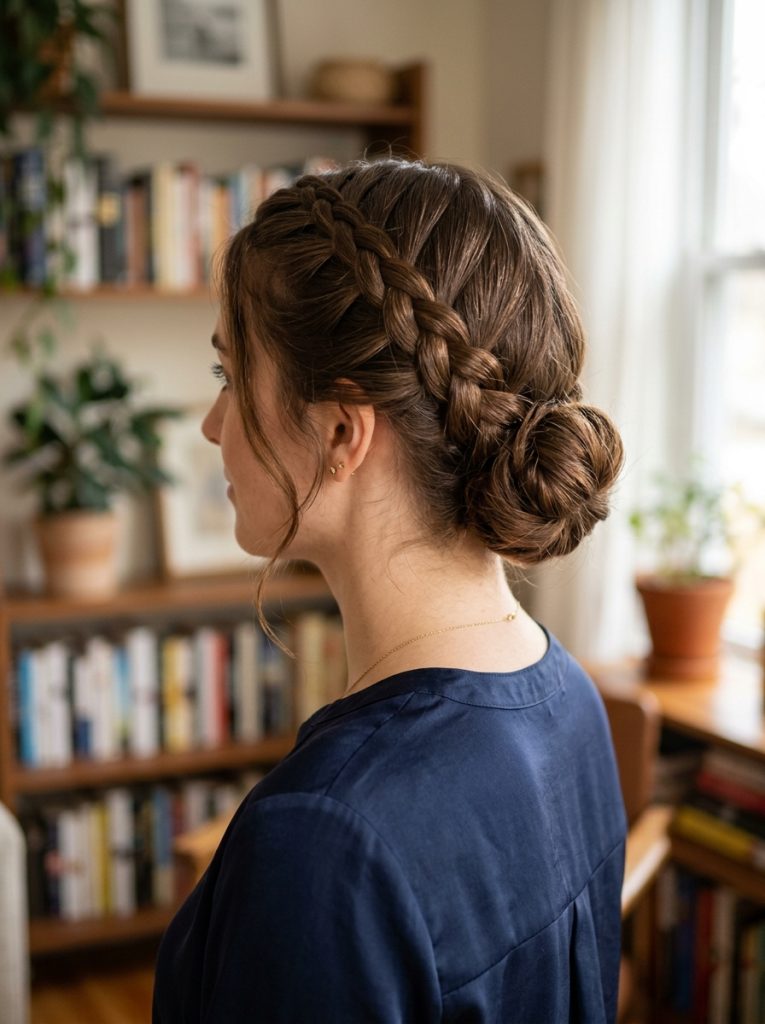
The classic low crown braid bun relies on symmetrical sectioning and a sturdy base to achieve a timeless, regal profile. Begin by using a fine-tooth tail comb to establish a clean center part running from the front hairline to the middle of the crown. Divide the hair into two equal side sections, securing each temporarily behind the ears. Gather the main body of hair at the nape of the neck into a firm low ponytail using a seamless elastic band. Separate the ponytail into two equal halves, weaving each into a standard three-strand braid down to the tips and securing the ends with clear micro-elastics. Cross the left braid over the right braid horizontally across the nape, wrapping both around the central elastic base to form a neat, flat circular bun. Insert sturdy U-shaped hairpins around the perimeter, pushing them inward to lock the structure firmly against the scalp before adding decorative pins along the top edge.